How to Choose an Electric Vehicle Charging Cable (Type 2 Guide)
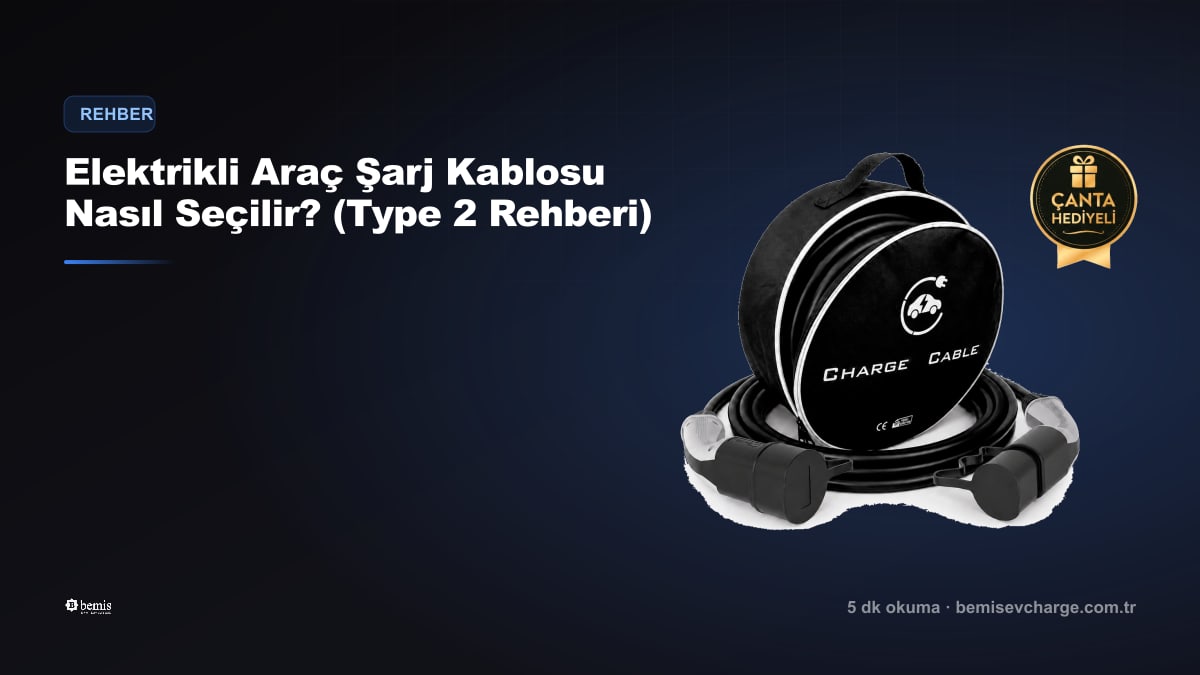
The electric vehicle charging cable is the most basic piece of equipment connecting your vehicle to a socket or station. The right cable provides both fast and safe charging; the wrong choice means slow charging or a risk of overheating. Here are the points to weigh up when choosing a Type 2 charging cable.
What is Type 2?
Type 2 (IEC 62196) is the standard connector for AC charging in Europe and Turkey. Almost all new electric vehicles and AC charging stations use Type 2. Mode 3 cables also provide safe communication between the vehicle and the station.
1) Amperage and power: 16A or 32A?
- 16A: about 3.7 kW single phase, about 11 kW three phase.
- 32A: about 7.4 kW single phase, about 22 kW three phase.
- If your cable's amperage is below what your vehicle and the station support, it limits the charge — choose the highest value they have in common.
2) Single phase or three phase?
A three-phase cable (5 conductors) carries higher power (11–22 kW); it is advantageous if your home or station has three phase and your vehicle supports it. On a single-phase installation, a single-phase cable is sufficient.
3) Length
5 metres is ideal for most uses; choose according to the distance between the vehicle's parking spot and the socket. A cable that is too long is harder to carry, while one that is too short reduces flexibility.
4) Quality and safety
- A durable, flexible outer sheath and a sturdy connector (for frequent plugging and unplugging).
- Proper temperature and overcurrent resistance; conformity with IEC 62196 / IEC 61851.
- Buy from a local, accessible manufacturer — so warranty and replacement are easy.
Bemis is a local charging cable manufacturer producing Type 2 charging cables at its own facility — with the assurance of quality and supply.
Choose the right Type 2 charging cable for your vehicle — locally manufactured by Bemis.
See Charging CablesFrequently Asked Questions
Should I buy a 16A or 32A charging cable?
It is best to choose the highest value your vehicle and the charging station have in common. A 16A cable carries about 3.7 kW single phase and about 11 kW three phase; a 32A cable reaches about 7.4 kW single phase and up to about 22 kW three phase. If your cable's amperage is below what your vehicle or the station supports, that limit determines the charge, and you waste your available power by charging more slowly. So, to keep it suitable for higher-power use in the future too, it makes sense to choose the highest value that both your vehicle and the station allow.
How many metres should the charging cable be?
5 metres is ideal for most uses. You should choose the right length according to the distance from the vehicle's parking position to the socket or charging station. A cable that is too long is harder to carry and coil and takes up space; a cable that is too short reduces your flexibility when parking and may not reach across the distance to the socket. So take into account the location of the charging point in your parking area and determine a length that suits your needs. As a general rule, 5 metres strikes a good balance between flexibility and convenience across different parking scenarios, both at home and at a station.
Is a Type 2 cable compatible with every vehicle?
Almost all new electric vehicles sold in Europe and Turkey use the Type 2 (IEC 62196) connector for AC charging; this is the standard AC charging connector in the region. Likewise, the vast majority of AC charging stations are Type 2, so a Type 2 cable of the right amperage provides broad compatibility. Even so, it is enough to confirm your vehicle's socket type before buying. Mode 3 cables also provide safe communication between the vehicle and the station, delivering both fast and safe charging. If your socket type is Type 2, you can comfortably choose the right cable.
Should I choose a single-phase or three-phase charging cable?
This depends on the electrical installation in your home or at the station and on your vehicle's support. A three-phase cable (5 conductors) carries higher power and provides charging up to 11–22 kW on three phase. If your home or the station you use has three phase and your vehicle supports three-phase charging, a three-phase cable is advantageous for faster charging. If your installation is single phase or your vehicle supports only single phase, a single-phase cable is sufficient and you avoid unnecessary cost. So before choosing, be sure to check both the installation in your home and your vehicle's charging capacity.
What should I look for in a quality Type 2 charging cable?
In a quality Type 2 charging cable, look first for a durable, flexible outer sheath and a sturdy connector, because you will be plugging and unplugging the cable frequently. It is important for safe charging that the cable has proper temperature and overcurrent resistance and that it conforms to the IEC 62196 and IEC 61851 standards. A wrong or low-quality cable can lead to slow charging or a risk of overheating. In addition, buying from a local, accessible manufacturer makes the warranty and replacement processes easier. Bemis is a local manufacturer producing Type 2 charging cables at its own facility.